From forest floor to your door
At ORGAMU SCOOPS, cultivation is a deliberate line—not a mystery. We turn organic by-products from local sawmills and farms into a clean growing medium, introduce quality spawn under careful conditions, and guide each bag through colonisation and fruiting until harvest.
This page walks through the same steps we teach in the field and document in our Oyster Mushroom Production Ebook: substrate, bags, pasteurisation, hygiene, colonisation, and harvest. The result is organic oyster mushrooms with the flavour and reliability our partners in Bamenda and beyond expect.
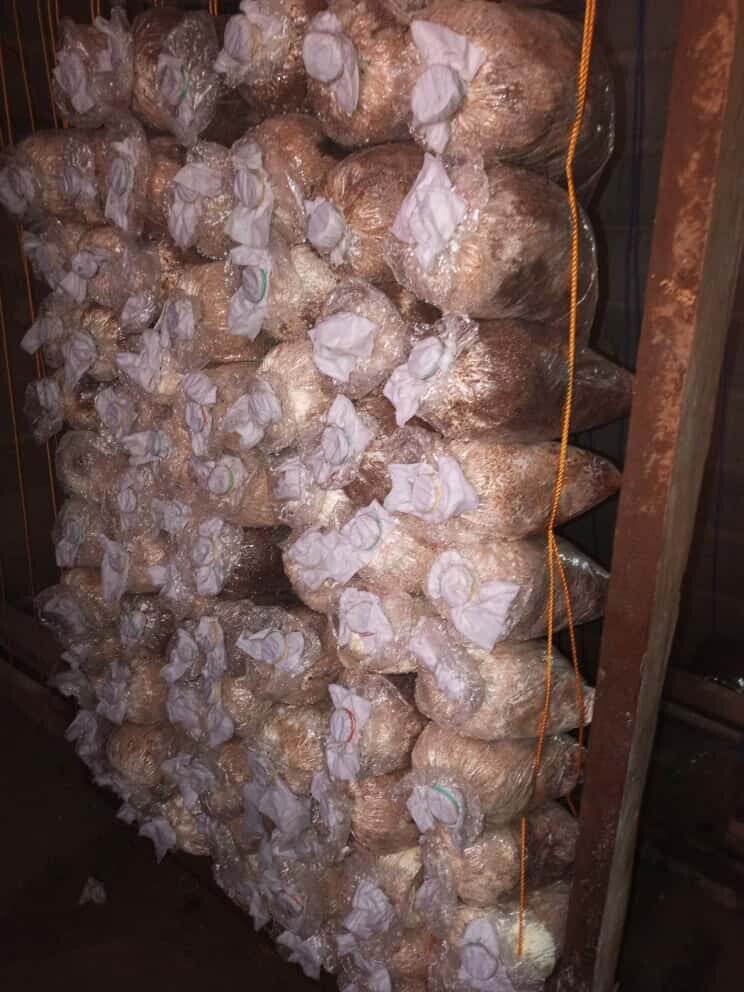
Our cultivation steps
Our six cultivation steps protect quality from the first material to the finished pack.
1. Waste collection: We partner with local sawmills and farmers to collect organic by-products such as sawdust and straw. This keeps valuable carbon in a productive loop instead of leaving it as unused waste.
2. Substrate preparation: Materials are prepared, pasteurised, and mixed so oyster mushroom mycelium can thrive. Moisture, structure, and nutrition are checked because weak substrate rarely recovers later.
3. Bagging and inoculation: Prepared substrate is packed into cultivation bags and inoculated with quality spawn. Clean tools, limited traffic, and disciplined hand and surface hygiene protect each batch.
4. Incubation and colonisation: Bags move into dark, climate-aware rooms where mycelium colonises the substrate. We monitor temperature and airflow so colonisation stays even and healthy.
5. Fruiting and harvest: Ready bags enter humidity-managed fruiting spaces. We harvest clusters at the right maturity for texture and shelf life, handling them gently because bruised mushrooms spoil faster.
6. Packaging and distribution: Harvested mushrooms are sorted and packed for institutions, retailers, and direct customers. Dried 100g packs extend reach, with Bamenda delivery or Yaoundé pick-up arranged clearly.

Hygiene pledge
Hygiene is not a poster on the wall; it is a daily operating system. Organic oyster mushrooms grow in warm, humid rooms where contamination can appear if discipline slips. Our pledge is simple: controlled environments, clean routines, and honest handling so every harvest is safer to eat, better tasting, and more consistent.
We limit unnecessary traffic, keep workwear and handwashing intentional, and separate dirty substrate tasks from clean inoculation and fruiting work where possible. Pasteurisation and careful bagging reduce competing organisms before spawn meets the mix. We watch moisture to avoid standing water, keep tools and harvest containers for food use, and continue the same standard through sorting and packing.
From Bambili farm rooms to insulated sample boxes for chefs, calm handling protects texture and safety. Read our full hygiene standards or contact ORGAMU SCOOPS in Bamenda: WhatsApp +237674356081 · info@organicmushroomsco-op.com.

Reliable supply
Our competitive edge is reliable supply plus controlled hygiene. A documented process means partners can plan menus and inventory, while each batch is easier to teach, inspect, and improve. When something goes wrong in mushroom growing, the cause is usually upstream: wet bags, dirty inoculation, or rooms that swing too hot or too dry. We design the line to catch those risks early.
Hygiene is woven through every stage, not bolted on at the end. If you want to replicate a practical production line—mix formula, bagging, pasteurisation, colonisation, and harvest—our self-paced ebook packages field modules and a capstone batch plan. Order dried packs or larger lots via WhatsApp +237674356081, or email info@organicmushroomsco-op.com.